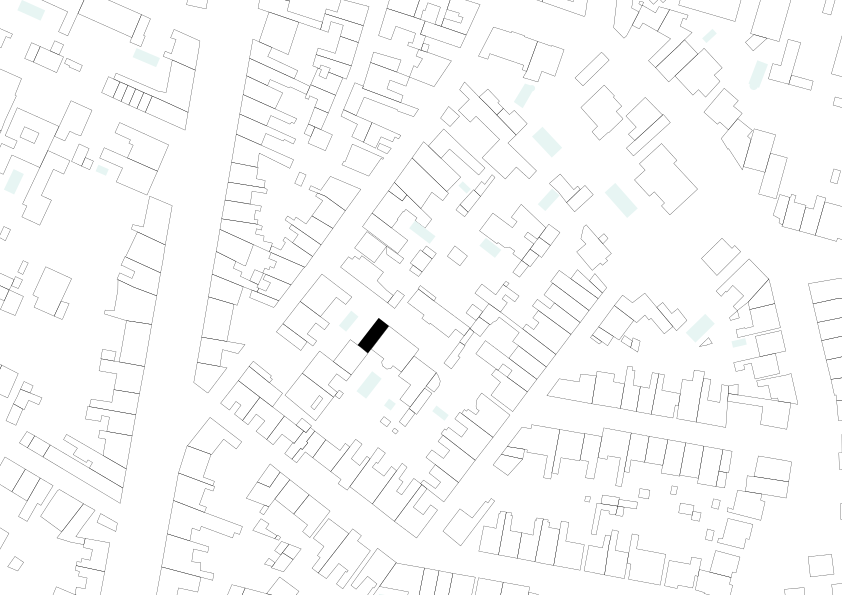
Garçonnière
+- Programme Rénovation d’un appartement et d’un garage
- Lieu La Rochelle 17000, France
- Maîtrise d'ouvrage Privée
- Maîtrise d'oeuvre FMAU
- Dates 2022 - 2023
- Surface 87 m² SDP
- Mission Mission complète
- Crédits Antoine Espinasseau, Milena Villalba
- Responsable projet Anna Ponizy
- Équipe projet Alexandre Bertet
Multifonctions.
L’architecture du XXème siècle a contribué à sur-déterminer les fonctions et les usages dans l’architecture, avec un point culminant dans les principes du mouvement moderne et ses héritiers, où déplacer un meuble revenait à anéantir le projet. Depuis la Villa Laroche de Le Corbusier, jusqu’à la maison III de Ungers, en passant par la maison VI de Peter Eisenman, la villa Farmworth de Mies Van Der Rohe, la maison de verre de Jonhson ou bien la modernité suisse, sous couvert d’humanisme ou d’empirisme théorique, les maisons ont été conçues comme des moments figés dans le temps.
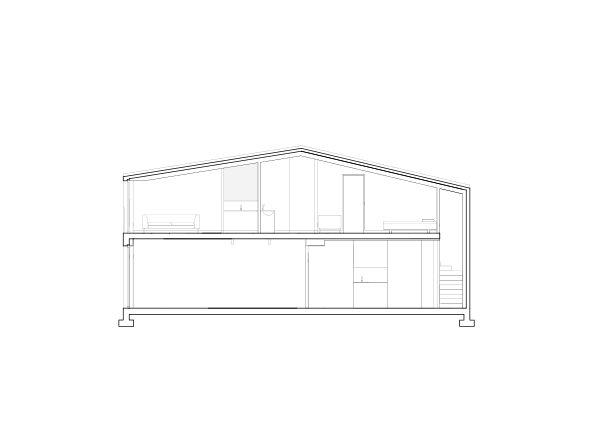
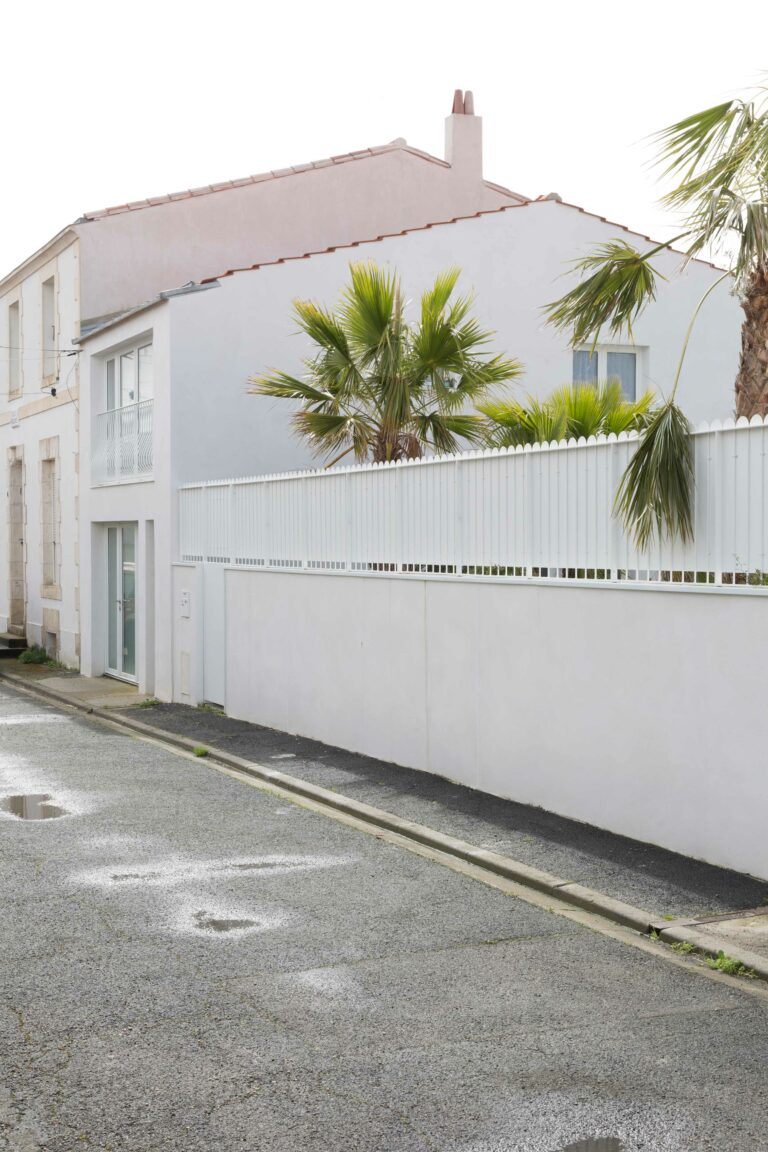
Il faudra attendre l’architecture japonaise du début du XXIème siècle avec Sejima et Nishizawa (dans une certaine mesure), mais surtout française avec les pionniers Lacaton&Vassal pour libérer l’espace domestique et le rendre à ses habitants. Ce qu’Eric Lapierre décrit comme l’architecture résultante au début des années 2000, et qui renverse notamment la production française vers une architecture physiquement décloisonnée et qu’on appeler, au début des années 2020, le rationalisme constructif. Loin de choisir son camp, le projet de la Garçonnière compile ces deux pensées dans un contenant très ordinaire, celui d’un bâtiment accueillant un garage au RDC et un logement à l’étage de surface équivalente.
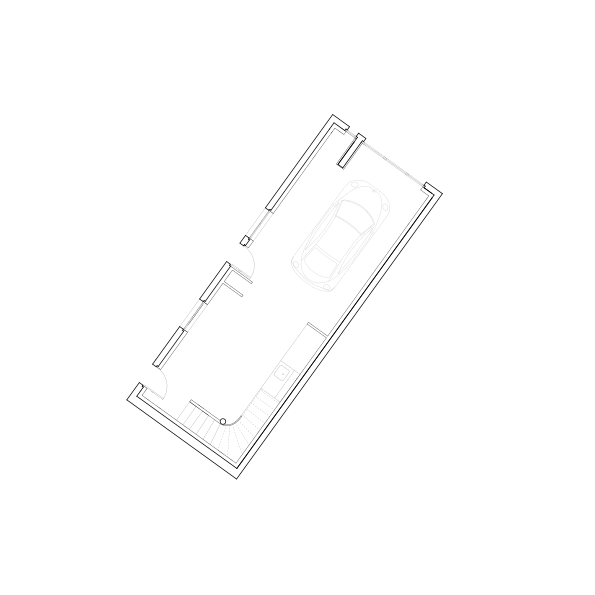
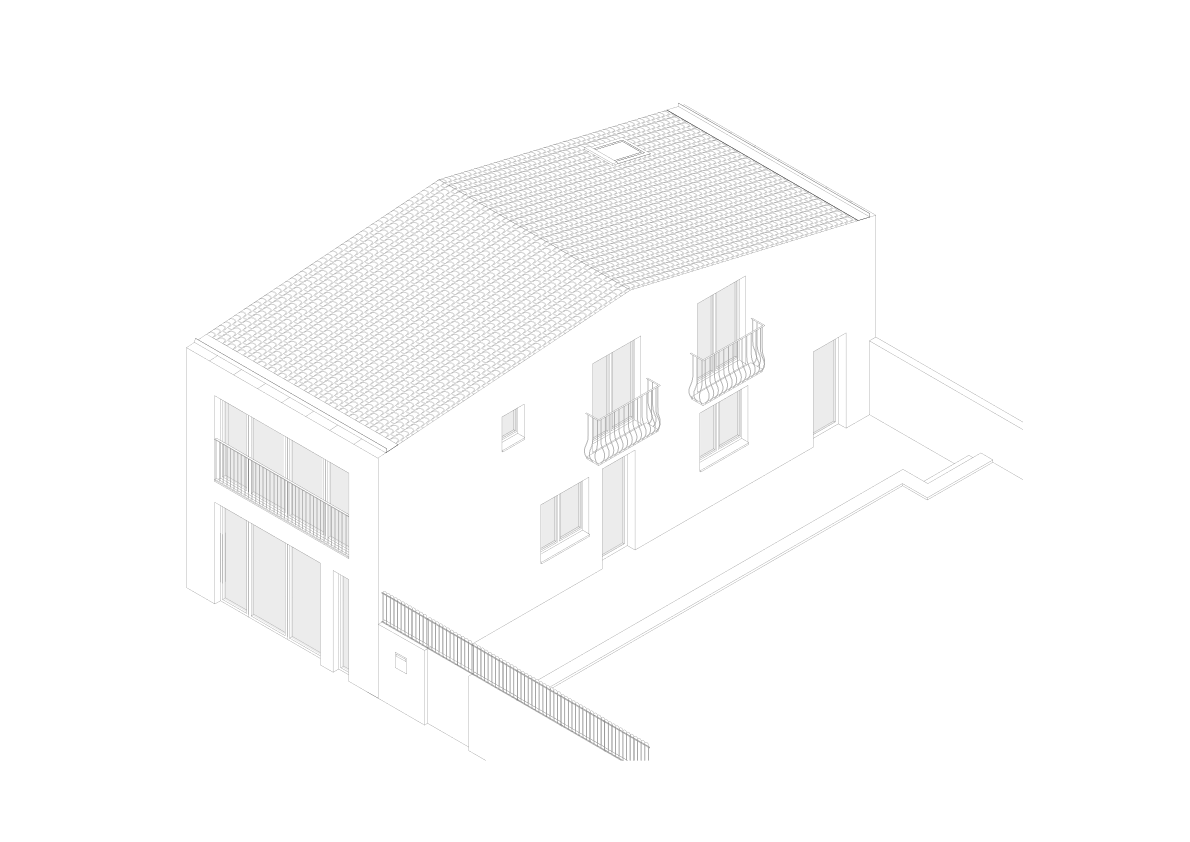
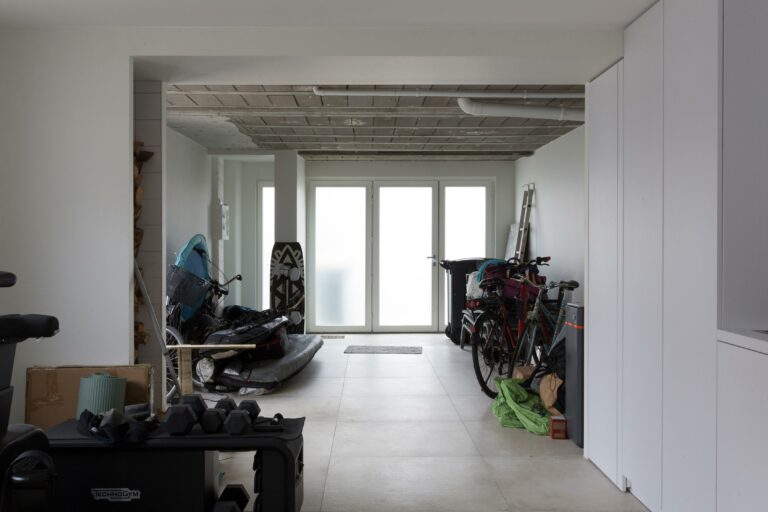
Le règlement d’urbanisme, misant encore sur l’usage important de l’automobile, exige que le garage reste un garage. Le projet respecte cette contrainte en conservant une vaste pièce permettant de garer deux voitures, mais aussi d’accueillir tout un ensemble d’autres fonctions : une cuisine, une buanderie, un garage à vélo, du stockage, une niche pour le bois, une salle de sport… L’ensemble servant aussi ponctuellement à faire des fêtes. La porte de garage s’efface et devient une grande porte vitrée translucide, laissant entrer la lumière du nord.
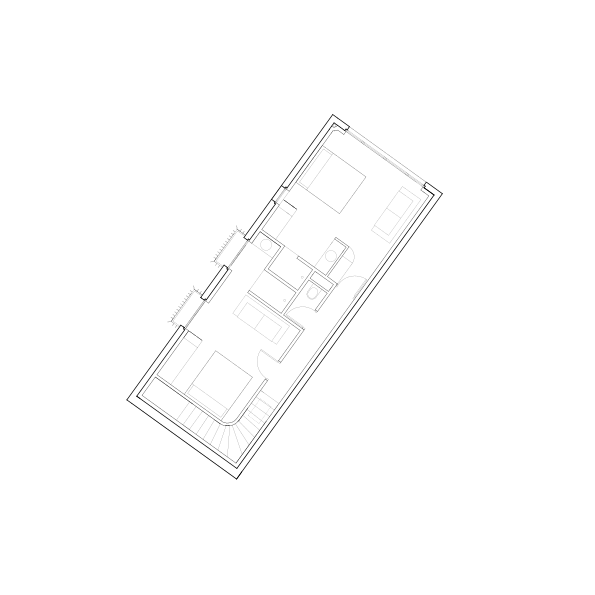
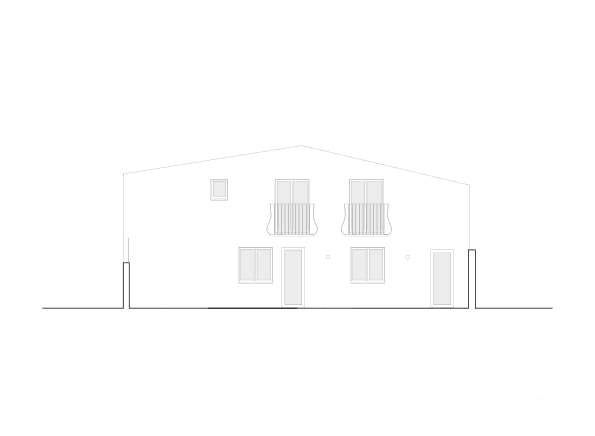
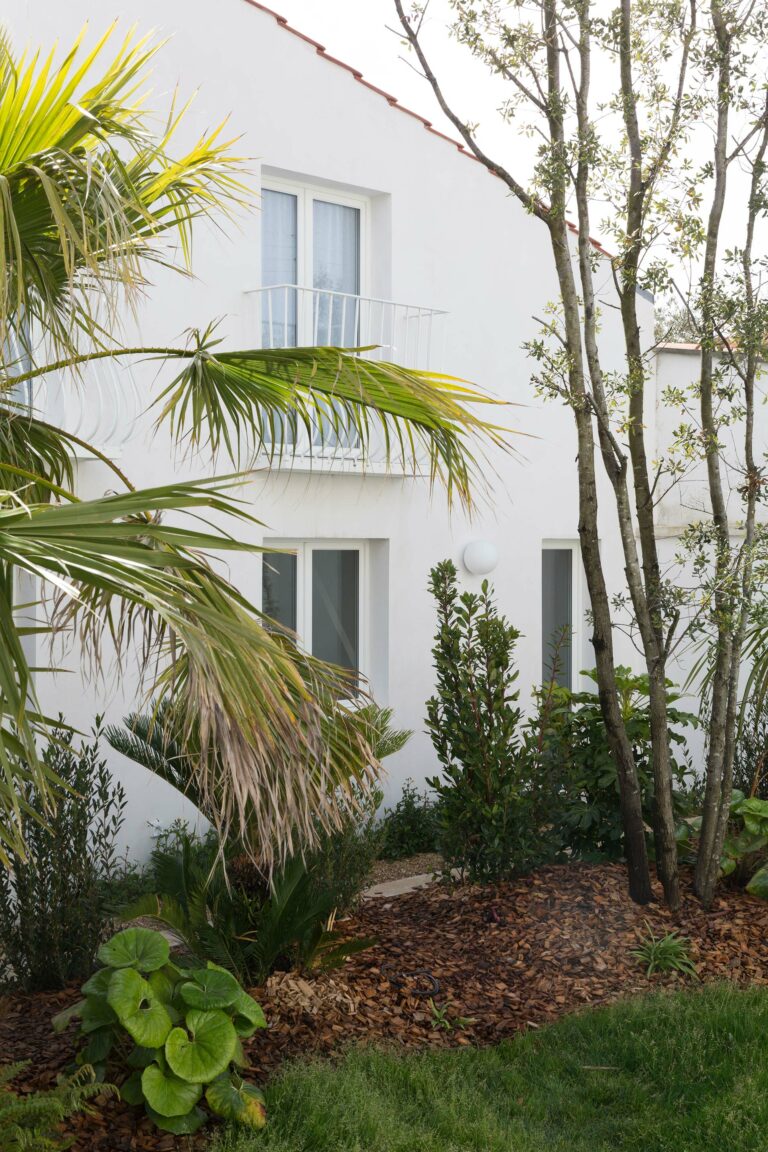
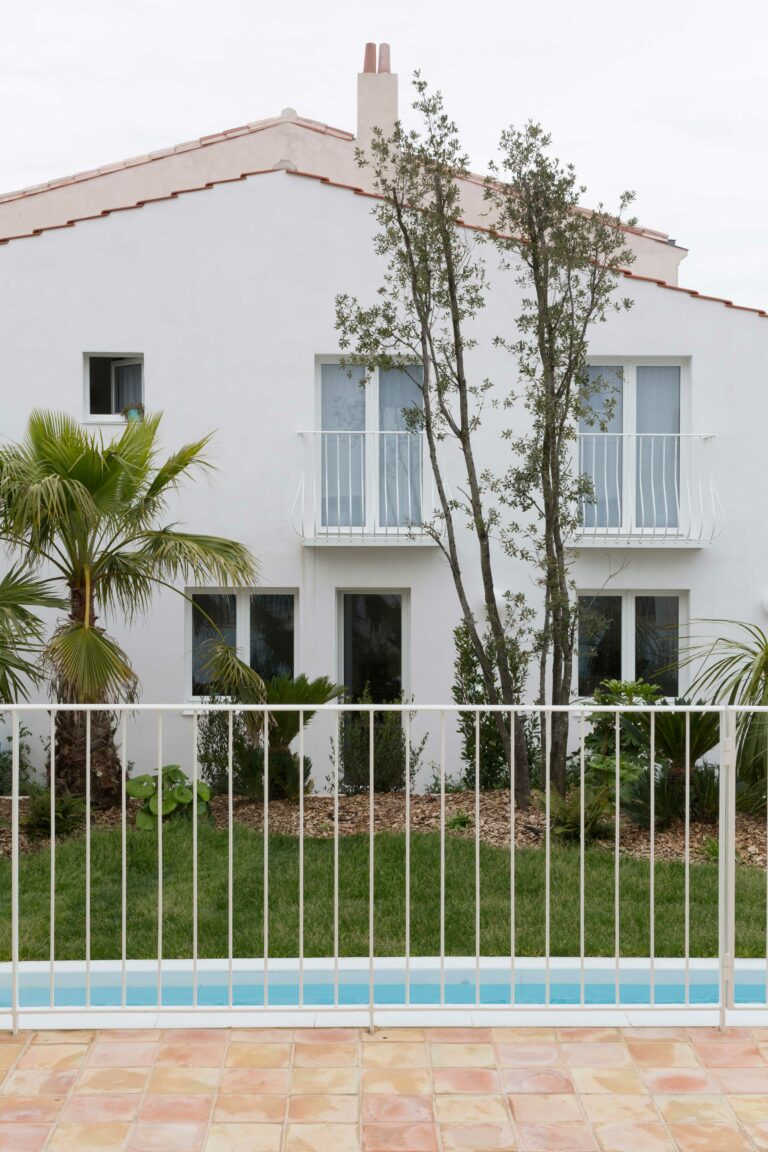
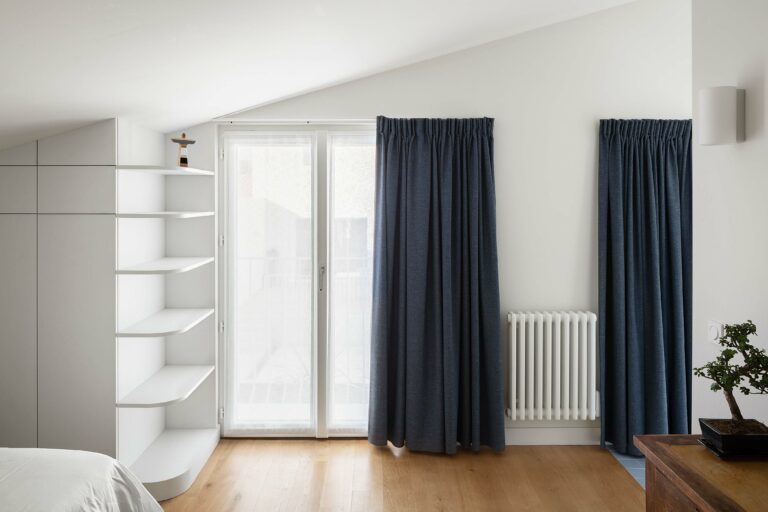
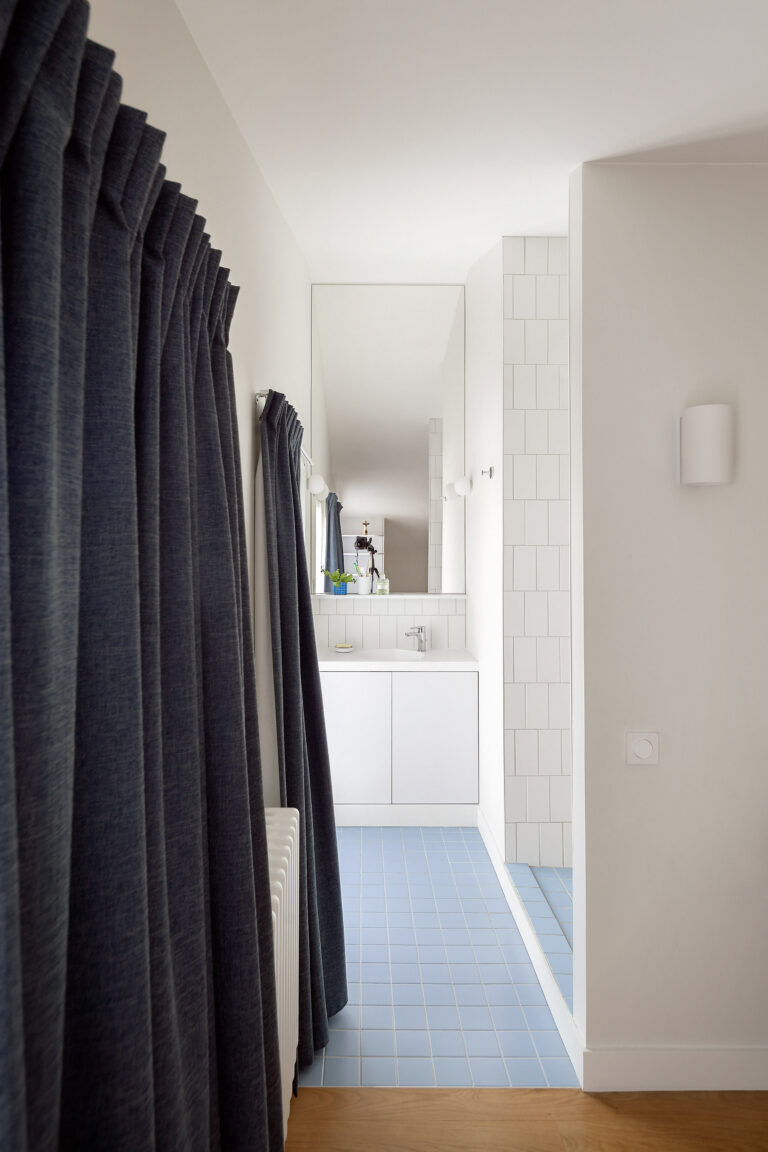
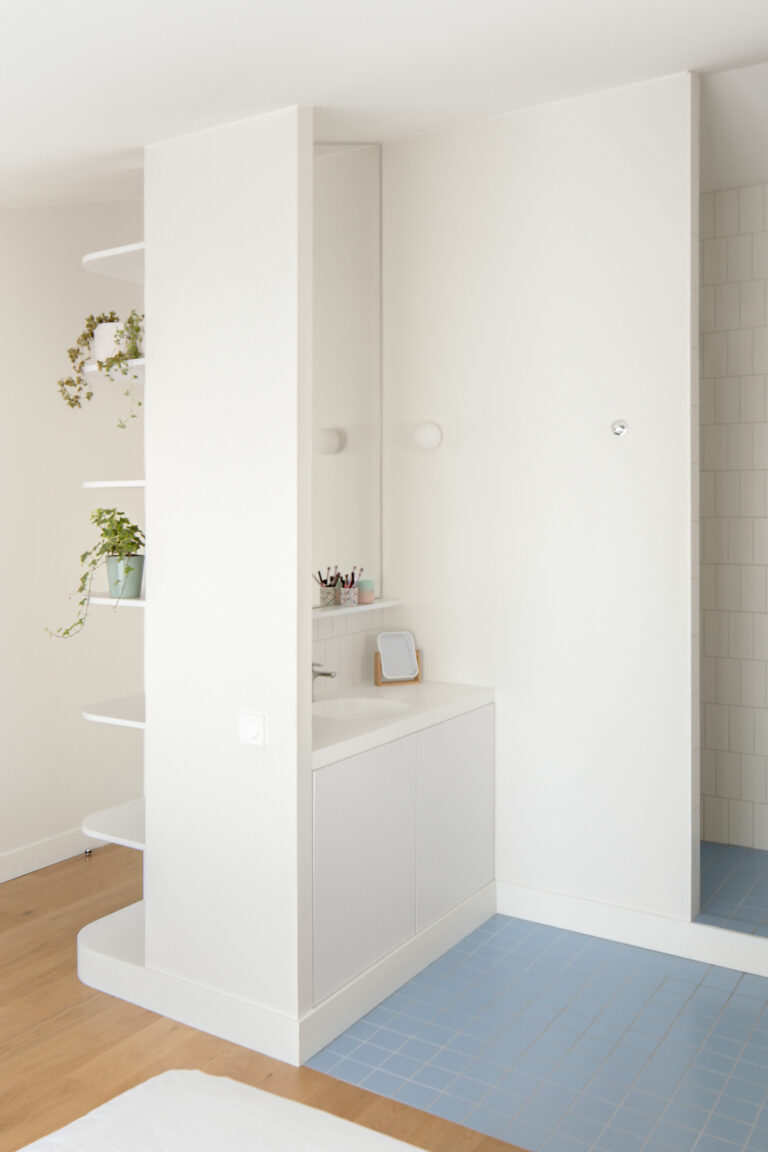
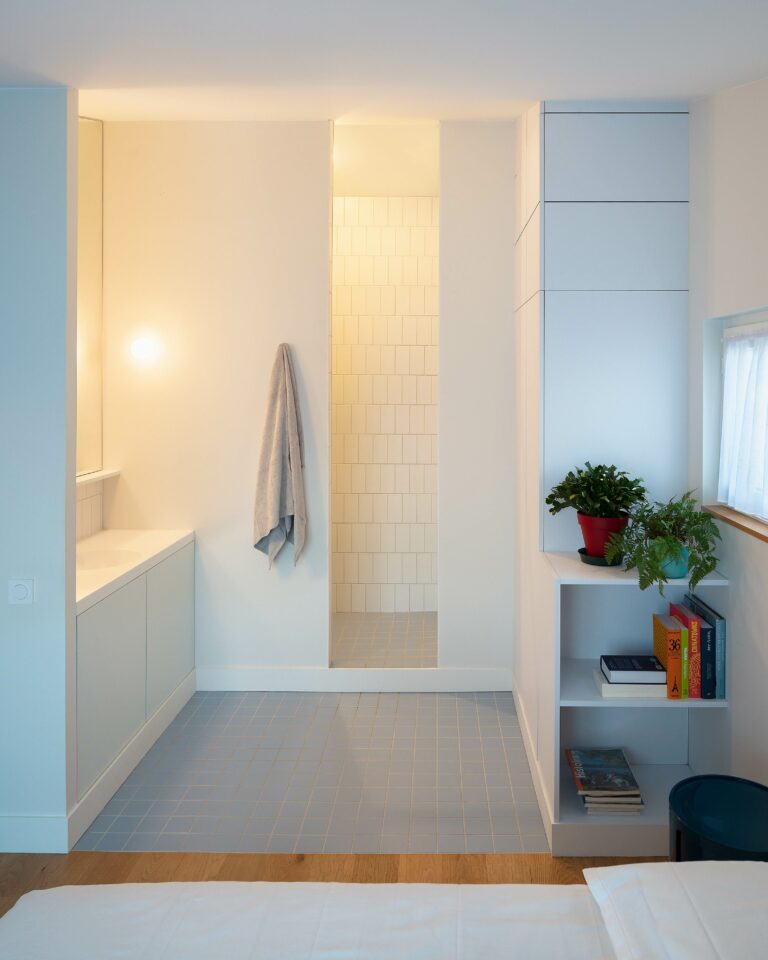
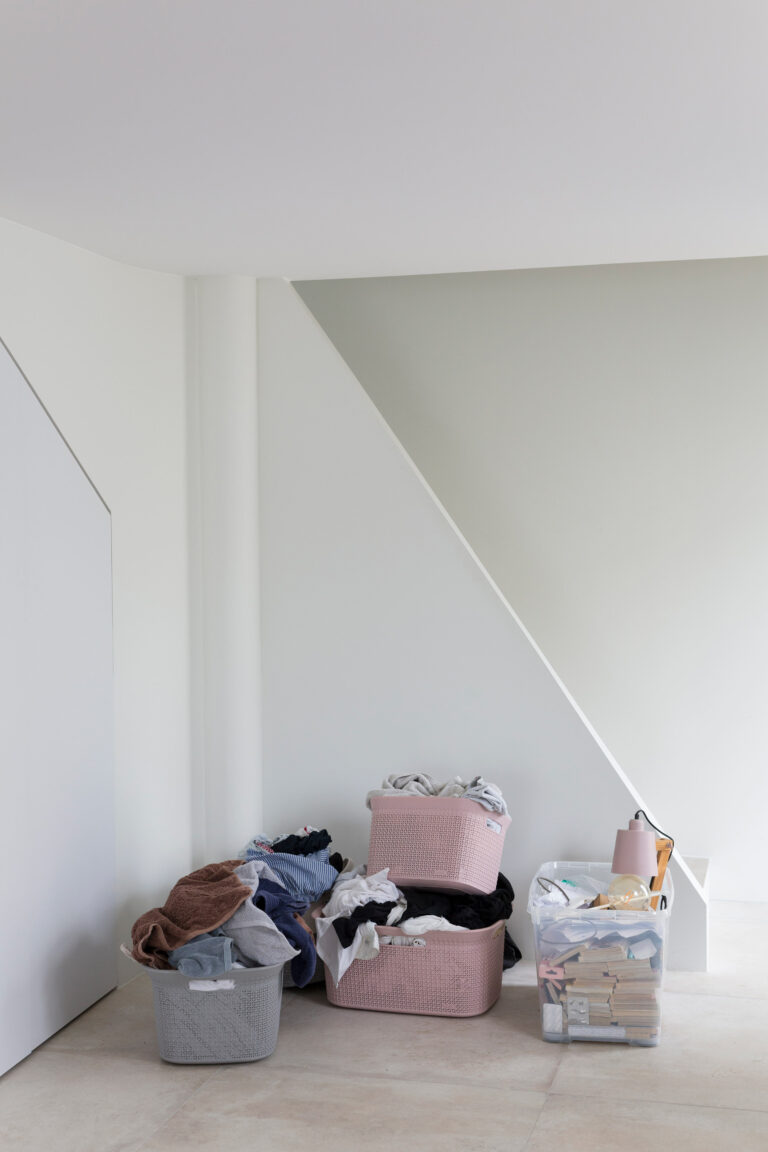
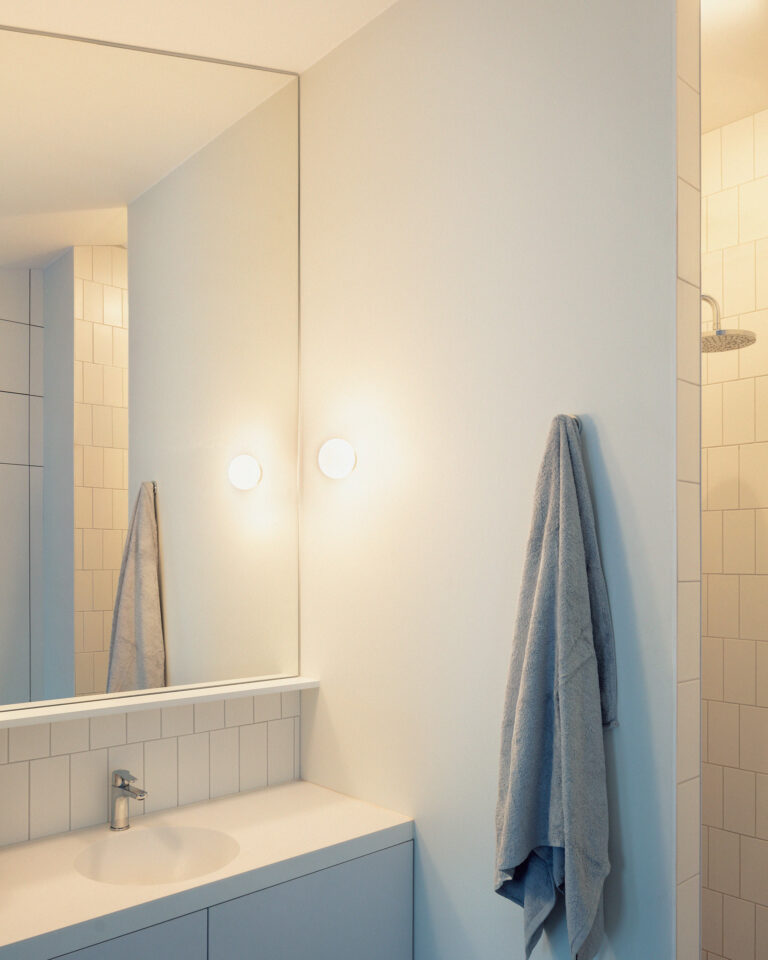
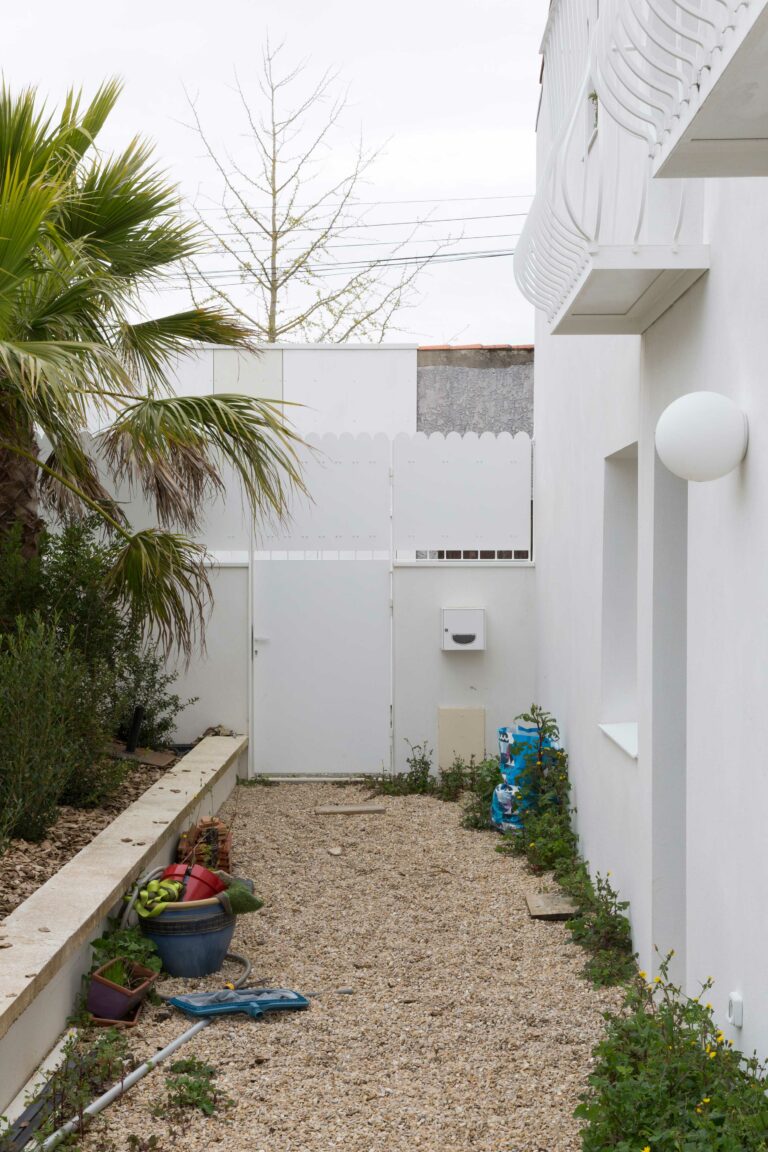
A l’étage, l’intérieur devient à l’inverse ultra dessiné, et chaque centimètre carré est couvert d’un usage ou d’une fonction dans un plan associant deux chambres aux allures de suite d’hôtel, lieux pour dormir mais aussi pour recevoir les amis dans un environnement moins exposé que la grande pièce du rez-de-chaussée. Ces suites possèdent 3 balcons, deux surplombants le jardin, un sur la rue.
Cette maison, qui n’en est pas vraiment une, et ce garage, qui n’en est pas vraiment un, fabriquent à eux deux un sentiment ambigu d’une domesticité des possibles, d’un état éphémère et ouvert.
- Programme Renovation of an apartment and a garage
- Location La Rochelle 17000, France
- Client Private
- Team FMAU
- Size 87 m²
- Mission Complete project management
- Credits Antoine Espinasseau, Milena Villalba
- Project manager Anna Ponizy
- Project team Alexandre Bertet
Multifunctional.
The architecture of the 20th century contributed to over-determining functions and uses in architecture, peaking with the principles of the modern movement and its heirs, where moving a piece of furniture equated to obliterating the project. From Le Corbusier’s Villa Laroche, to Ungers’ House III, through Peter Eisenman’s House VI, Mies Van Der Rohe’s Farnsworth House, Johnson’s Glass House, or Swiss modernity, under the guise of humanism or theoretical empiricism, houses were designed as moments frozen in time.
It wasn’t until early 21st-century Japanese architecture with Sejima and Nishizawa (to a certain extent), but especially French architecture with pioneers Lacaton&Vassal, that domestic space was liberated and returned to its inhabitants. This is what Eric Lapierre describes as resultant architecture in the early 2000s, which notably reversed French production towards a physically open architecture that we call, in the early 2020s, constructive rationalism. Far from choosing a side, the Garçonnière project compiles these two thoughts into a very ordinary container, that of a building housing a garage on the ground floor and a living space on the upper floor of equivalent area.
The urban planning regulation, still betting on the heavy use of cars, requires that the garage remain a garage. The project respects this constraint by maintaining a large room allowing for the parking of two cars, but also accommodating a whole range of other functions: a kitchen, a laundry room, a bicycle garage, storage, a wood niche, a gym… The whole space also occasionally serves as a party venue. The garage door disappears and becomes a large translucent glazed door, letting in northern light.
Upstairs, the interior becomes, on the contrary, highly designed, with every square centimeter covered by a use or function in a plan that combines two hotel suite-like bedrooms, places to sleep but also to entertain friends in a less exposed environment than the large ground-floor room. These suites have three balconies, two overlooking the garden, one onto the street.
This house, which isn’t really a house, and this garage, which isn’t really a garage, together create an ambiguous feeling of a domesticity of possibilities, of an ephemeral and open state.