Maison Ciel
+- Programme Rénovation et extension d’une maison individuelle
- Lieu La Rochelle 17000, France
- Maîtrise d'ouvrage Privée
- Maîtrise d'oeuvre FMAU
- Dates 2022 - 2025
- Surface 148 m² SDP
- Coût 374 785 € HT
- Mission Complete
- Crédits Antoine Espinasseau
- Responsable projet Frédéric Martinet
- Équipe projet Geoffrey L'Heudé
L’urbanisme de la taxe
De 1792 à 1926, une contribution taxe le nombre d’ouvertures (portes et fenêtres) de tous les bâtiments français à usage d’habitation. Cet impôt produit comme réponse un emmurement lent et progressif des fenêtres et une réduction des largeurs de façades, rendant nombre de logements insalubres faute d’ouvertures. Il faudra attendre 1926, et le mouvement hygiéniste moderne, pour mettre un terme à cette taxe. Ce qui pourrait paraître anecdotique, montre la relation intime qu’entretient la ville avec sa fiscalité tout autant que les différentes normes constructives et sécuritaires.
Depuis 1967, la taxe locale d’équipement, devenue taxe d’aménagement en 2012, est adjointe aux autorisations d’urbanisme. Sa méthode de calcul repose sur une formule simple : Surface taxable créée × Valeur forfaitaire × Taux. La valeur forfaitaire est réévaluée tous les ans, le taux est une moyenne d’un taux défini par les collectivités (locale, départementale et régionale). Le montant de cette taxe a augmenté de façon constante depuis sa création de 40% entre 2012 et 2025, encourageant indirectement la transformation de l’existant au détriment de la construction neuve.
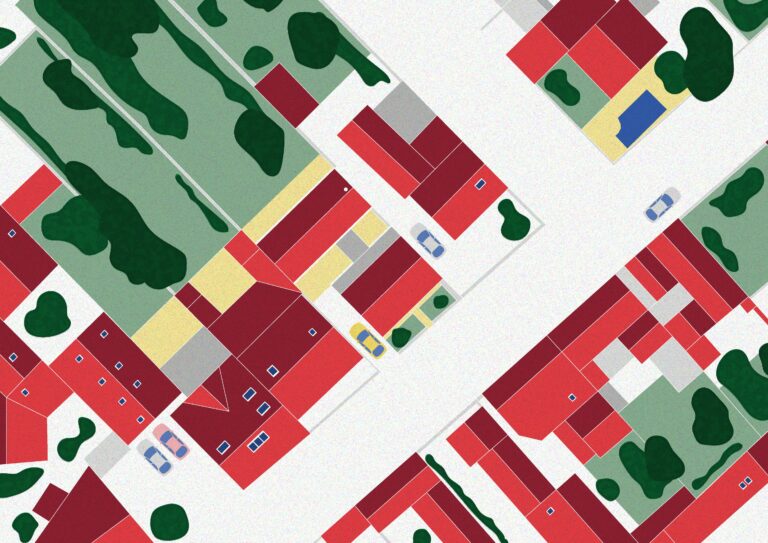
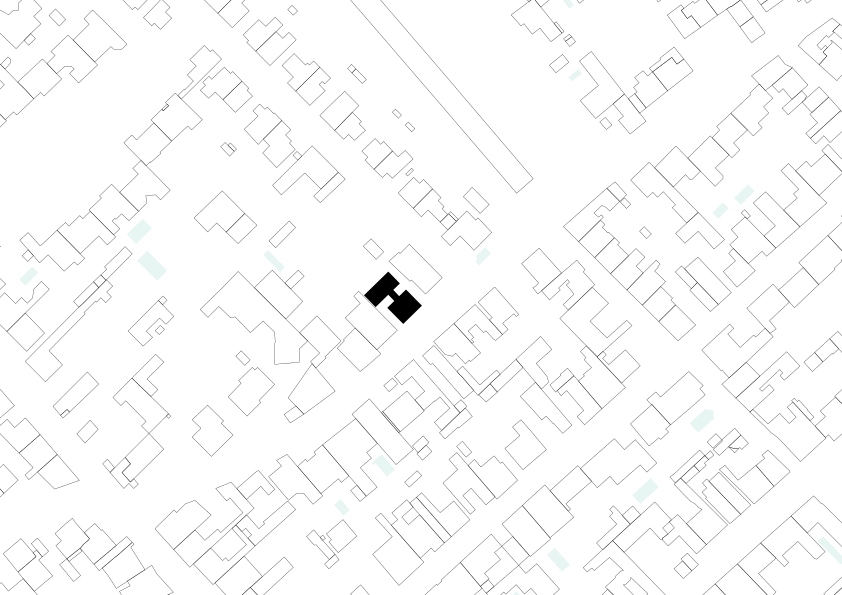
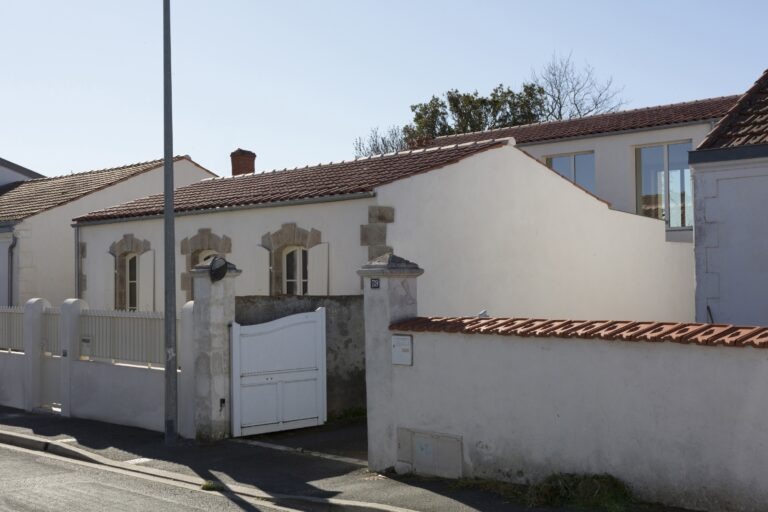
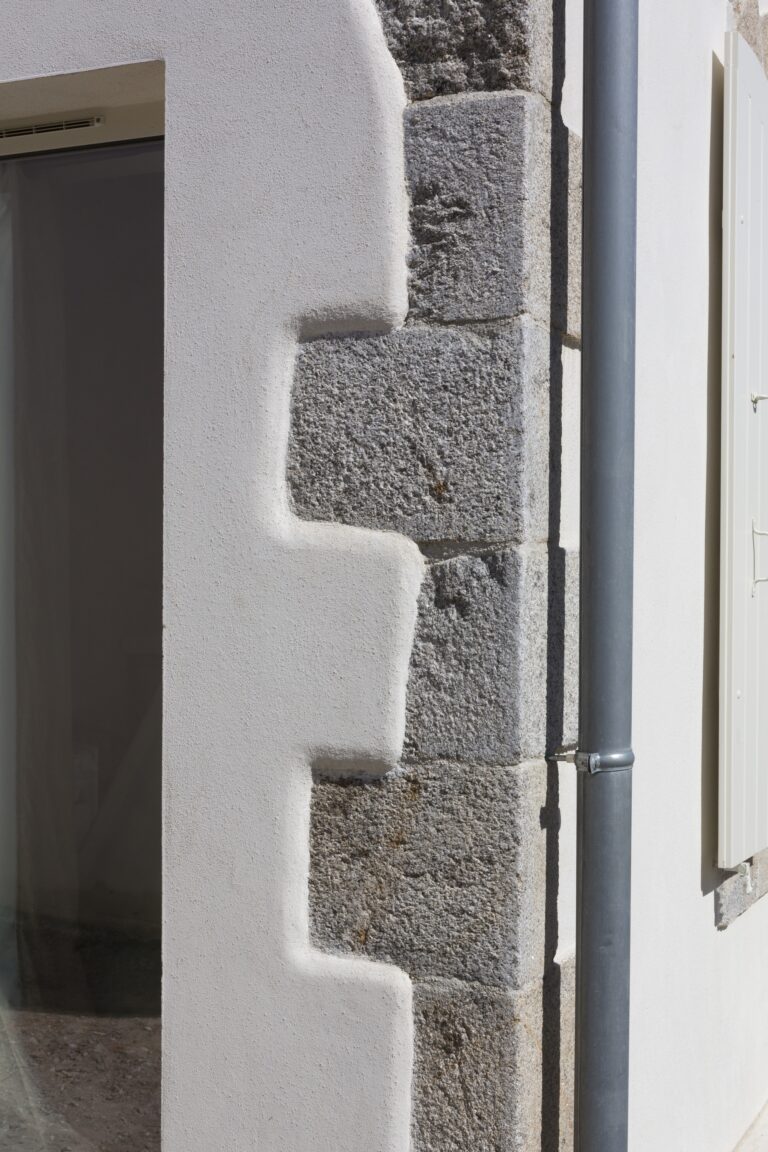
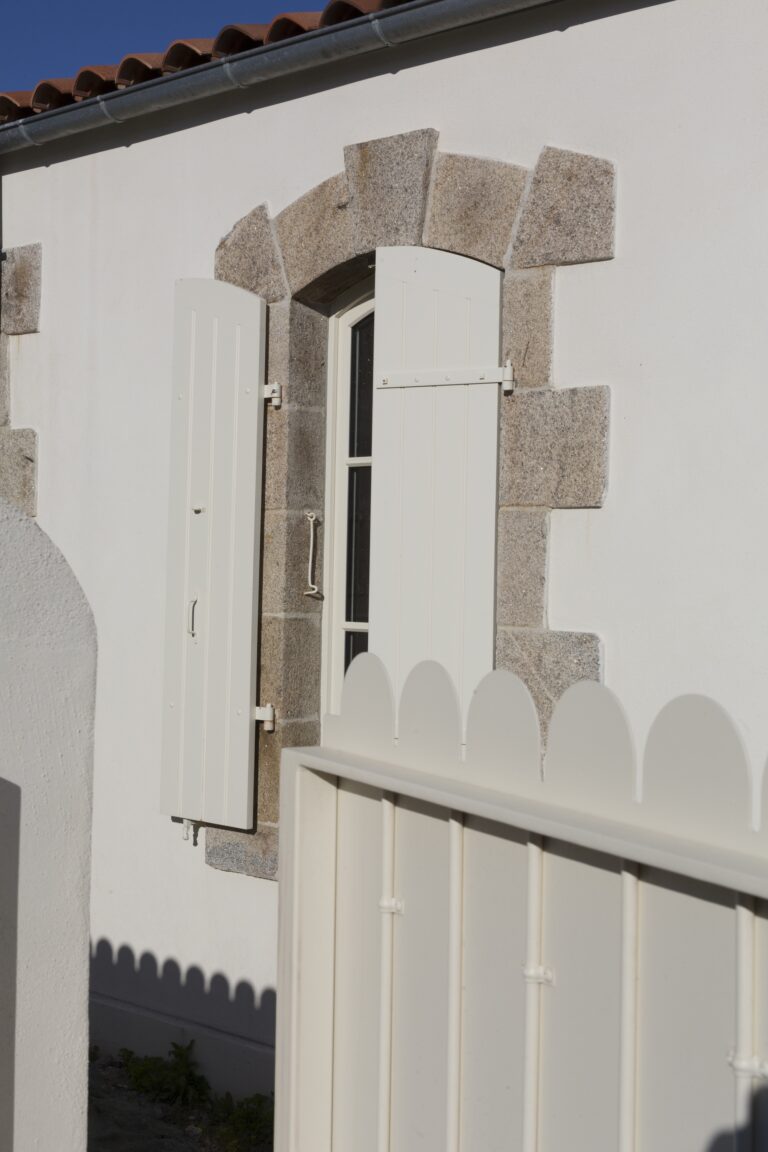
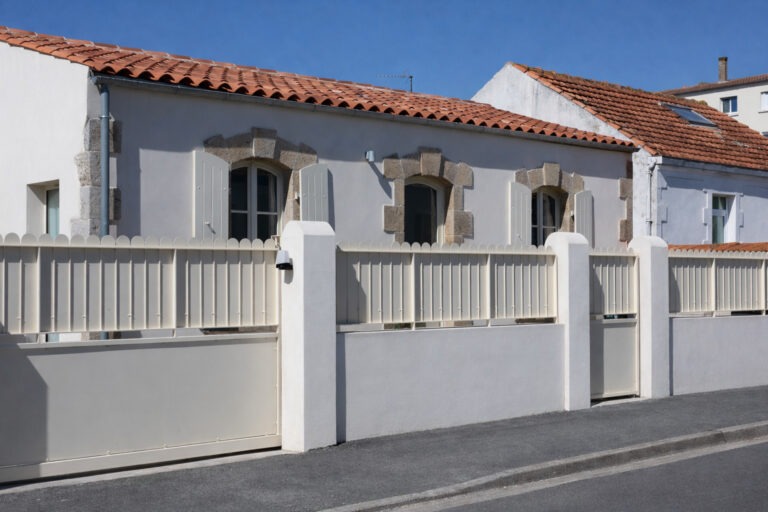
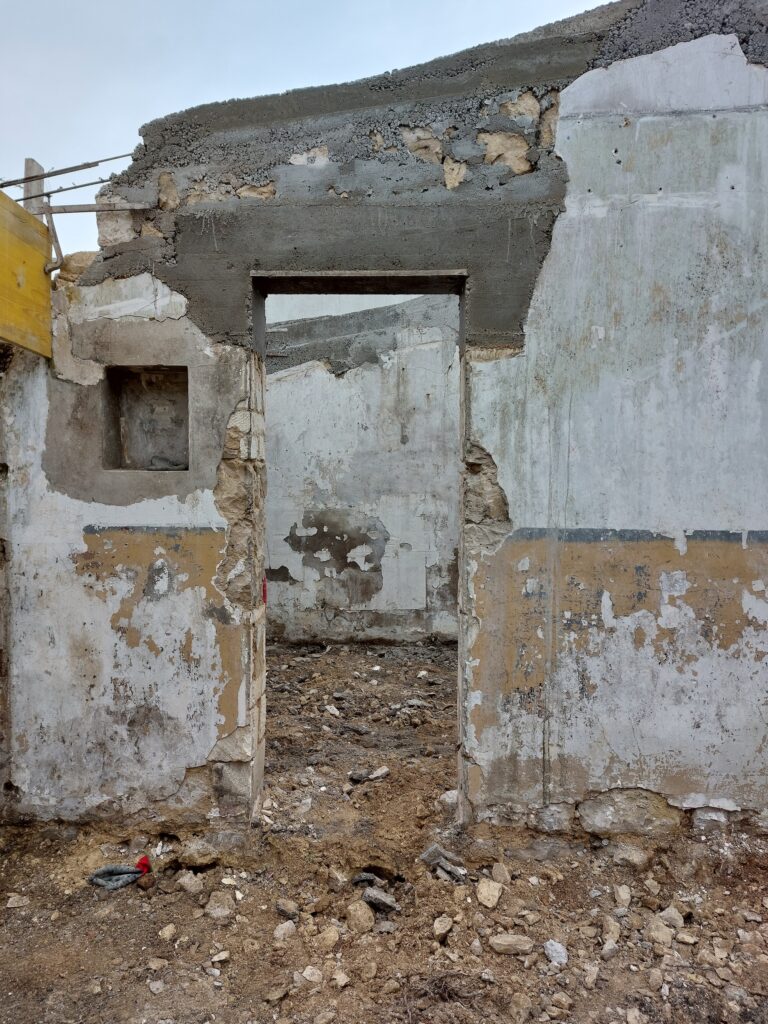
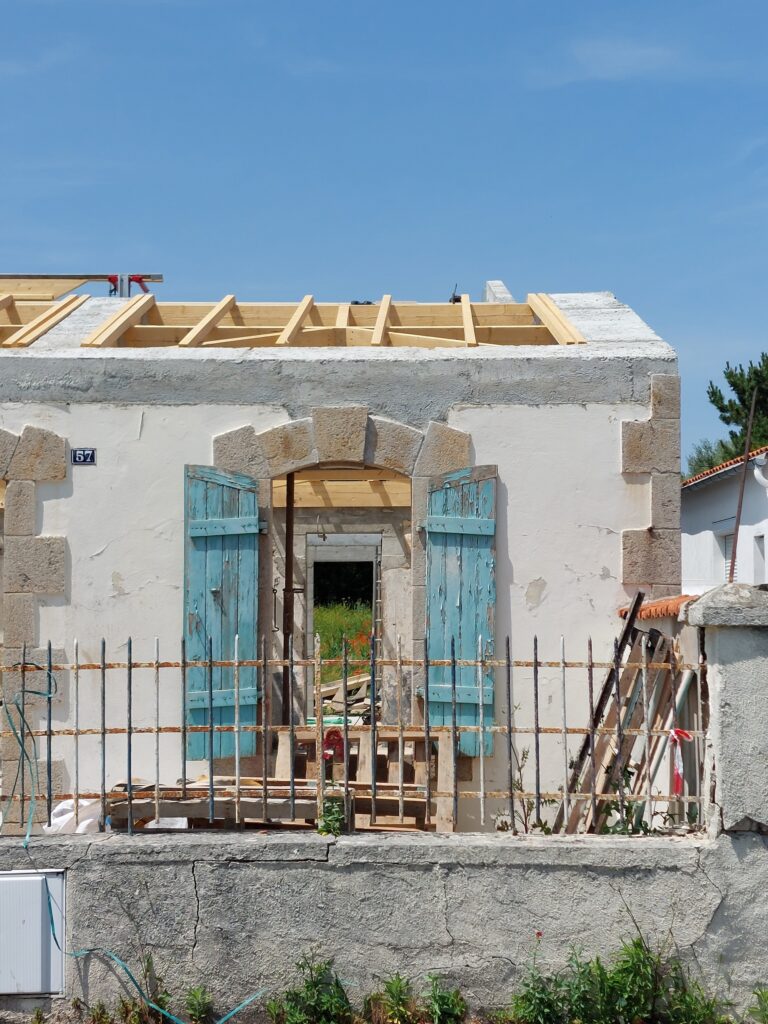
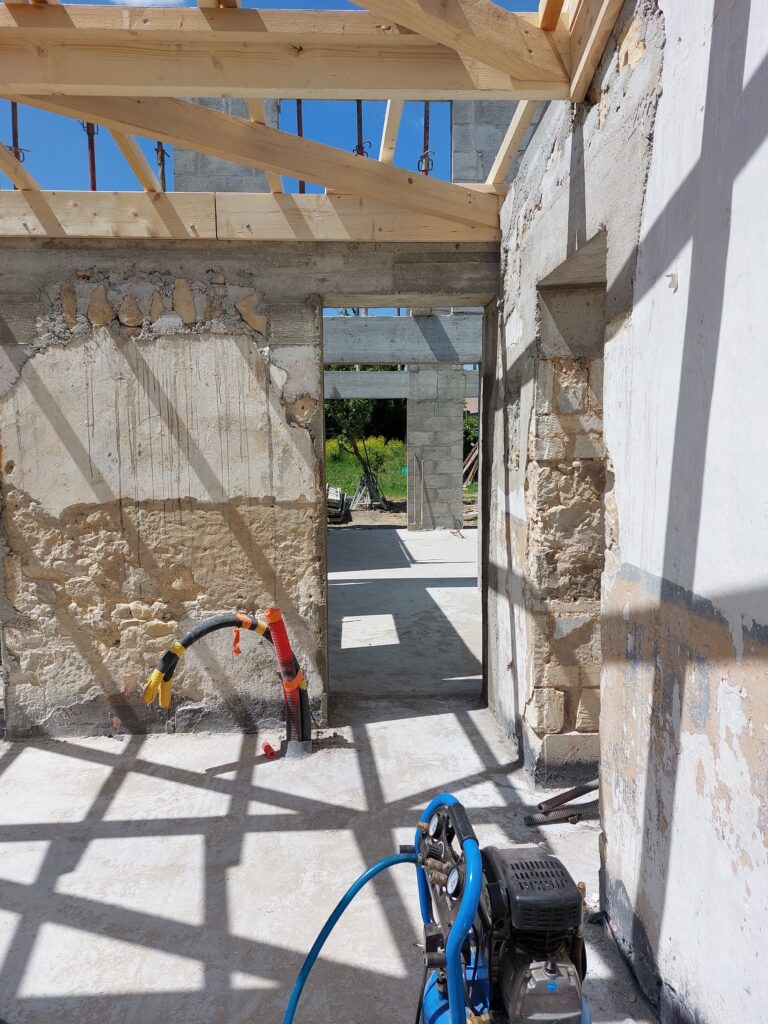
La Maison Ciel est un projet d’extension d’une petite échoppe située dans les faubourgs de La Rochelle. La maison originelle, construite à la fin du 19ème siècle et dont le marquage du temps se faisait discret depuis la rue derrière un jardinet en pagaille, présente la particularité de pierres d’encadrements et de chaînes d’angles en granite, confortant le choix de sa préservation dans un nouvel habitat. Le surcoût d’une déconstruction non radicale pour conserver les murs en moellons et leurs blocs singuliers en granite) est en partie rendu possible par l’arbitrage économique de l’application de la taxe d’aménagement. En effet, en conservant l’échoppe, le calcul de la taxe ne s’opère que sur la surface créée.
Son maintien joue également la diplomatie auprès des autorisations d’urbanisme en conciliant une silhouette familière à une nouvelle densité dans ce tissu faubourien.
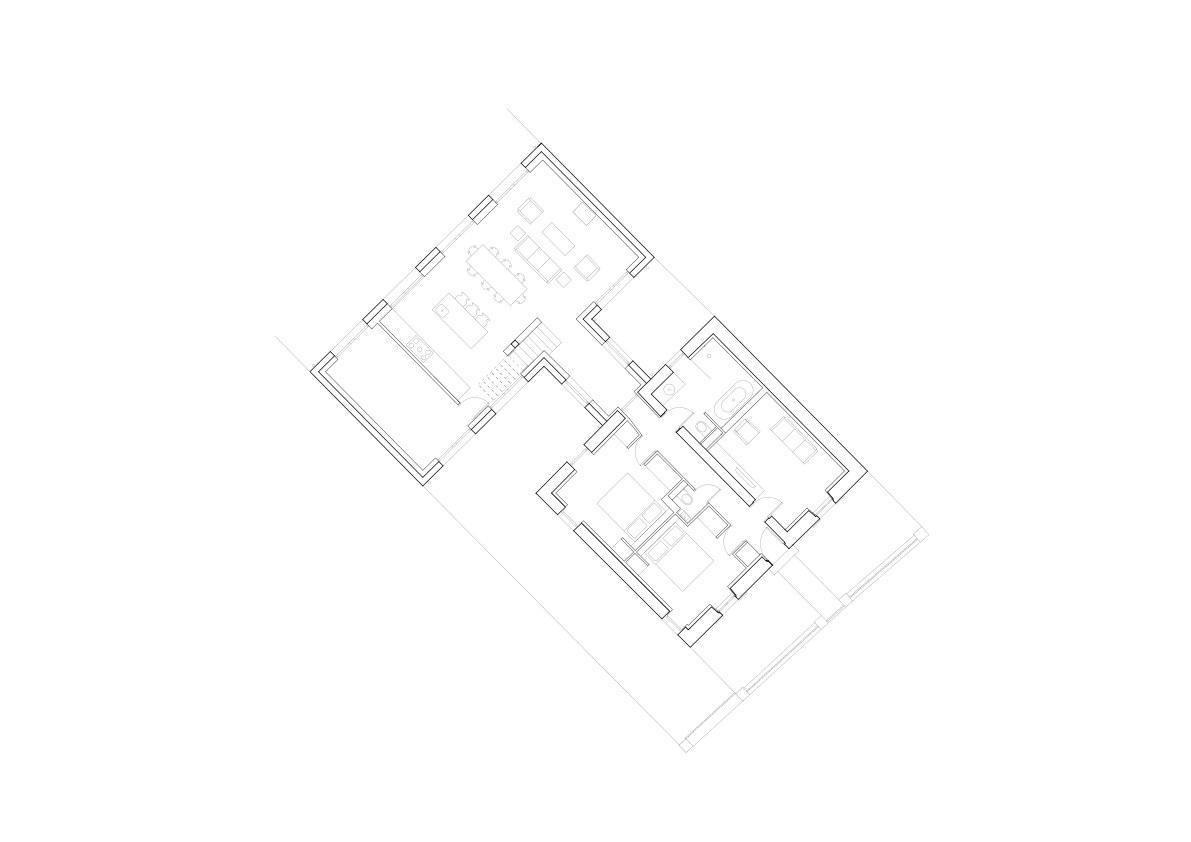
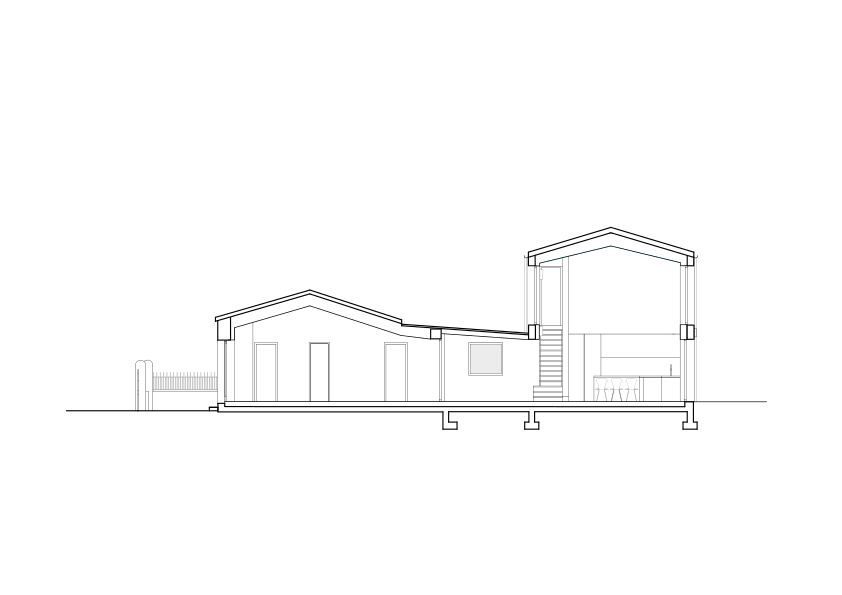
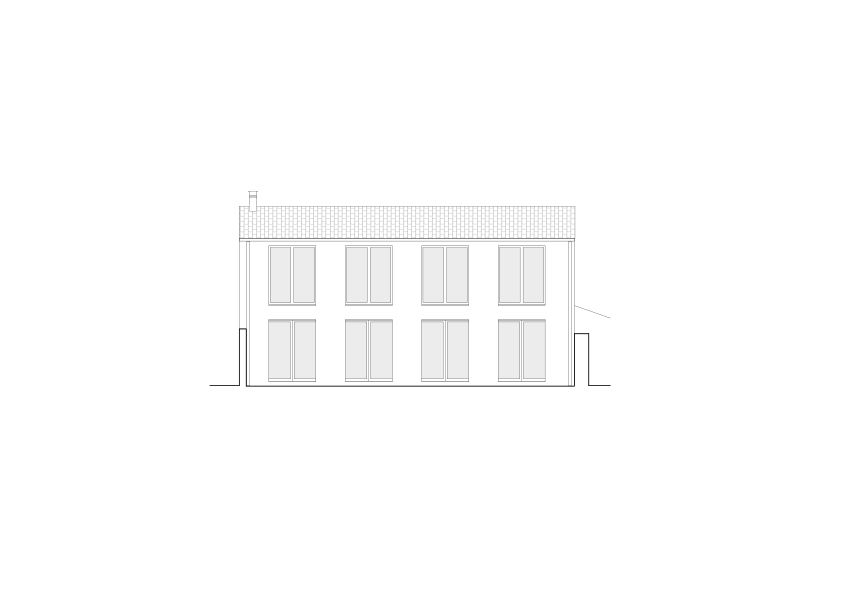
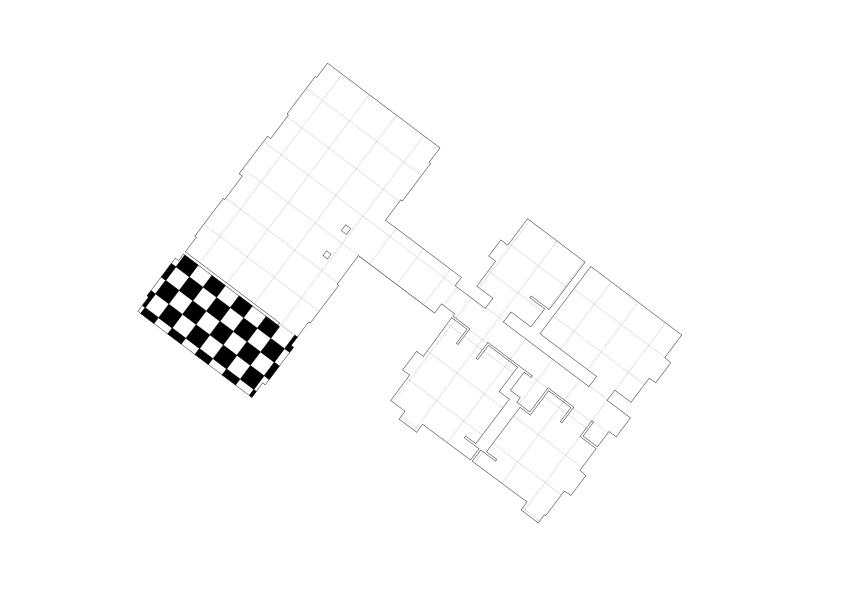
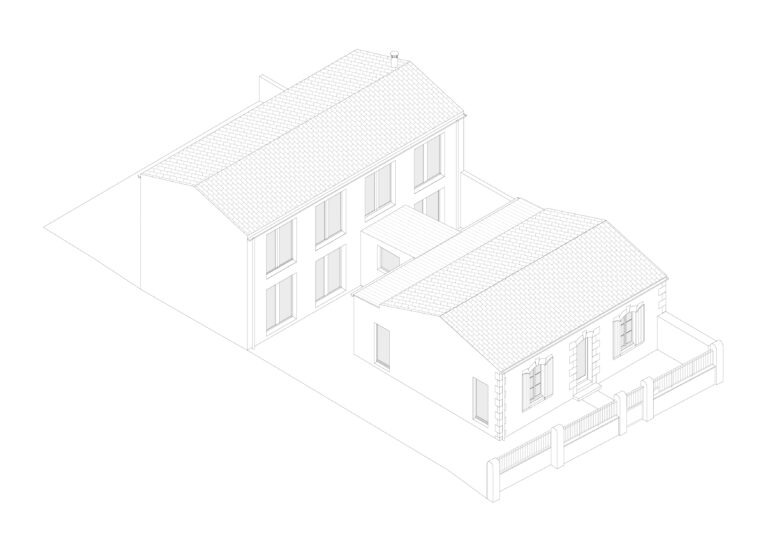
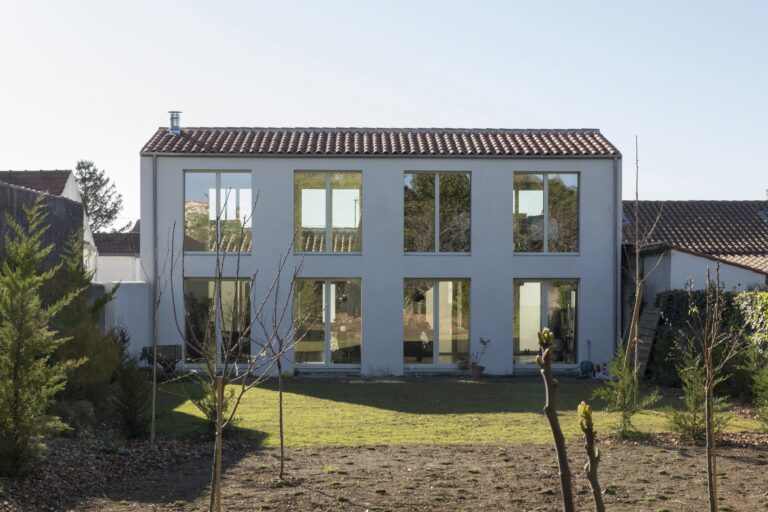
Pour apporter les 70 m2 manquants aux besoins des habitants, une extension est créée derrière l’échoppe, deux fois plus haute. Tenue à distance par une galerie qui la relie aux murs anciens, deux patios s’intercalent et augmentent les connexions entre les espaces. La nouvelle bâtisse, un rectangle de 12 x 6 mètres, est percée de huit baies uniformément reparties pour organiser un volume traversé par le ciel et un niveau supplémentaire imbriqué.
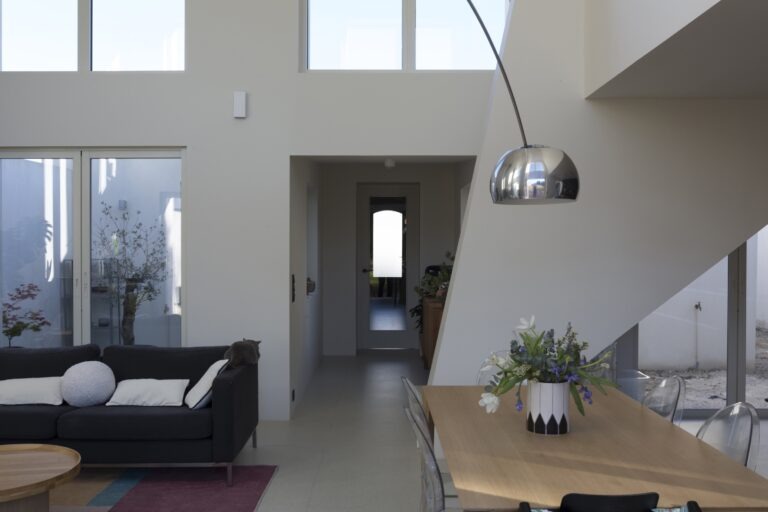
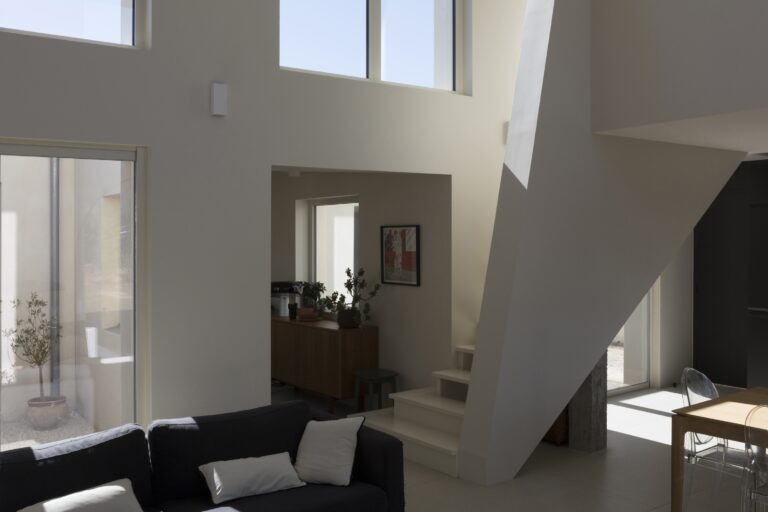
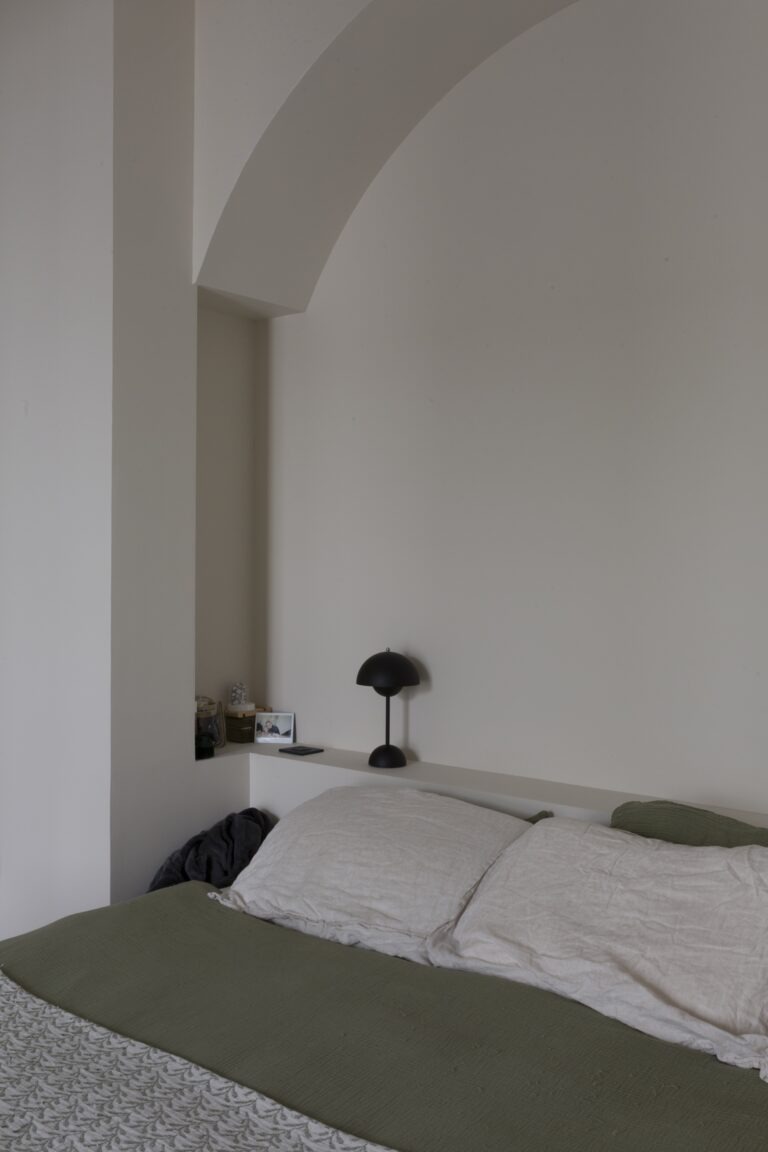
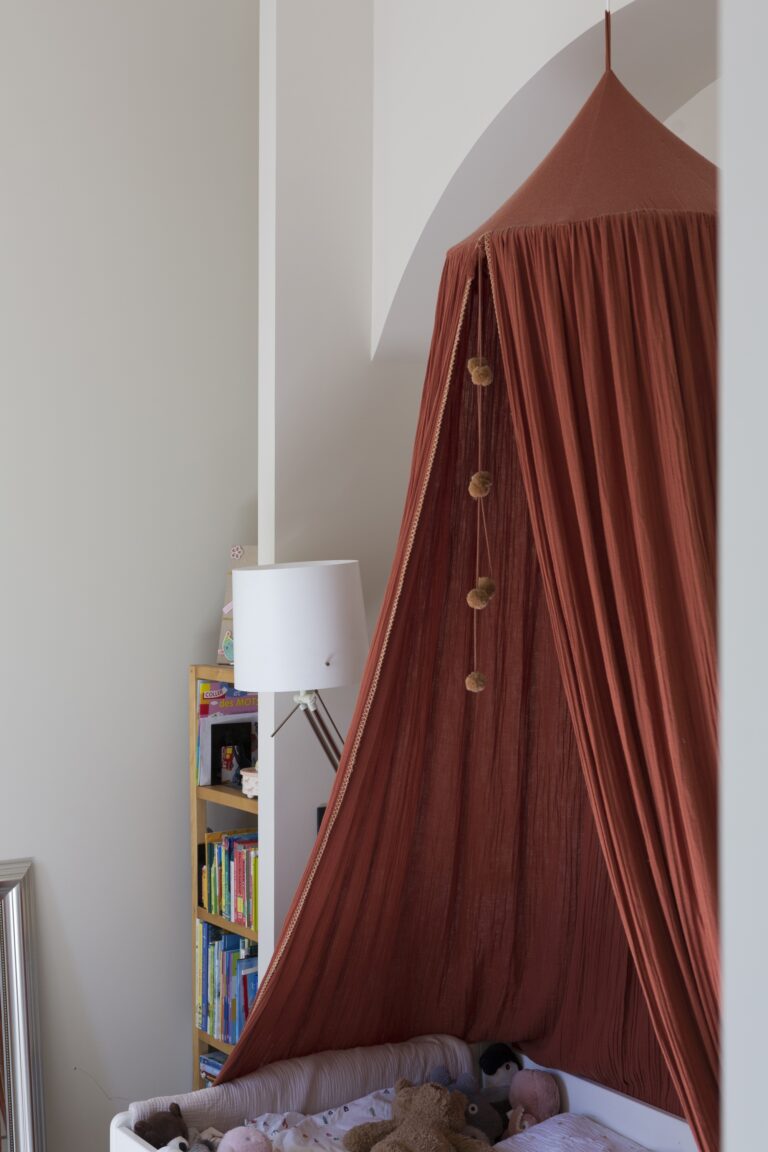
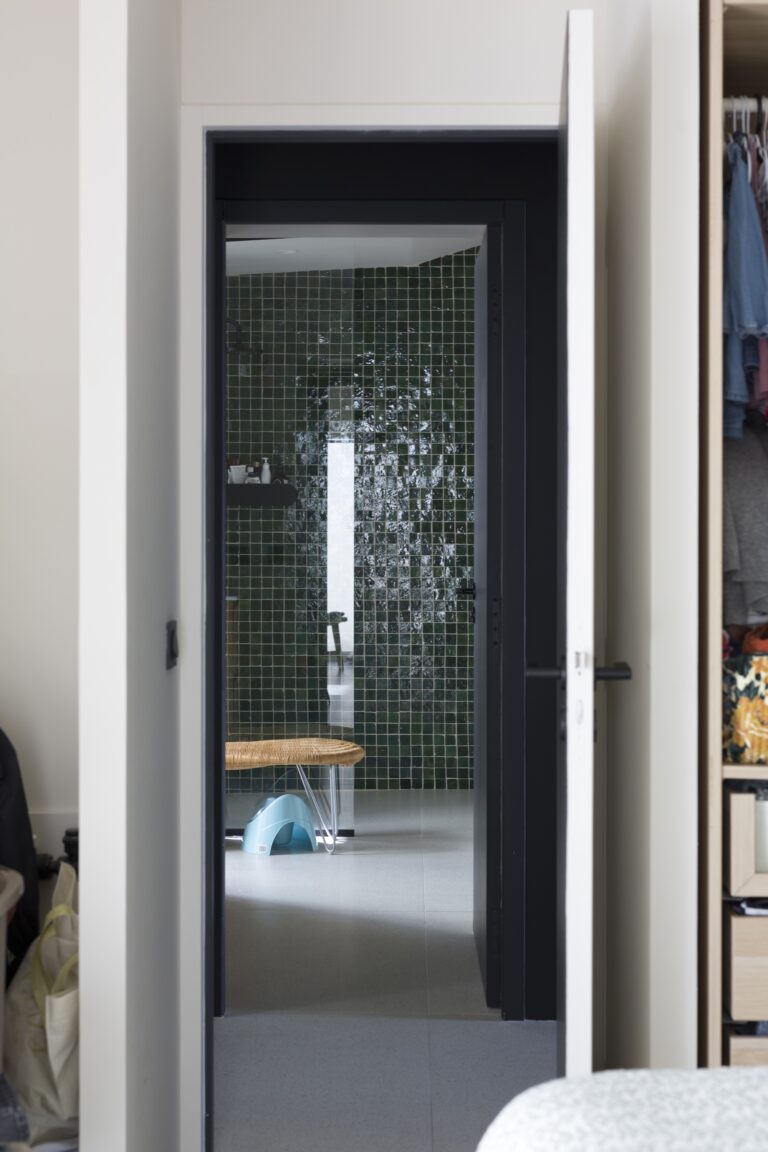
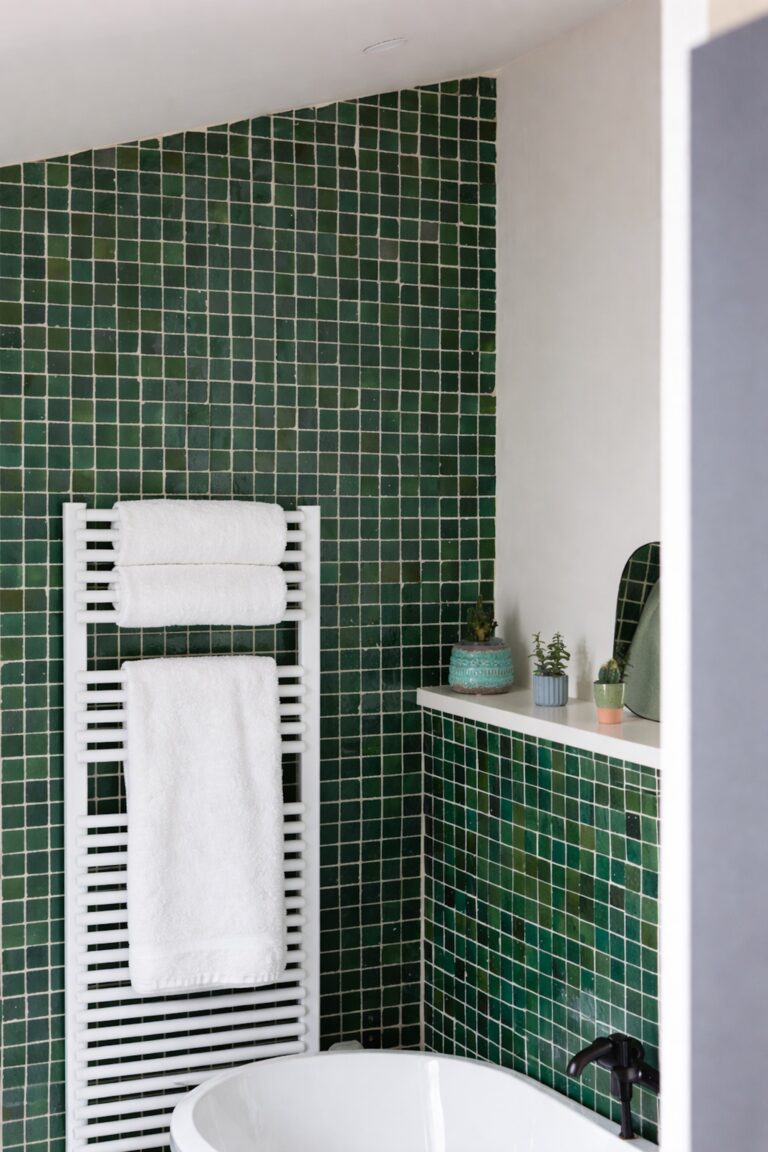
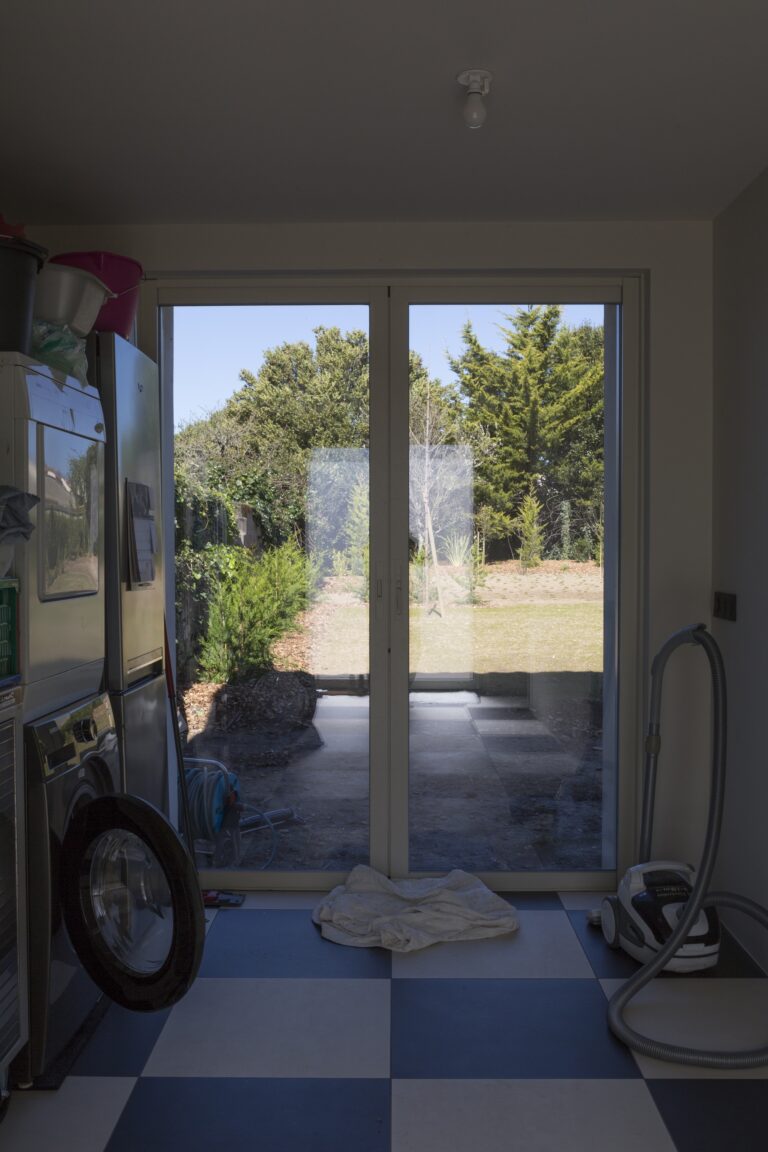
Le plan a été renversé, les espaces intimes s’approprient l’échoppe située au sud, distante de trois mètres de la rue ; le séjour et la cuisine sont transférés à l’arrière, sur le grand jardin, inondés de lumière. L’étage offre la capacité d’une nouvelle chambre avec sa salle de bains pour s’adapter à l’agrandissement de la famille.
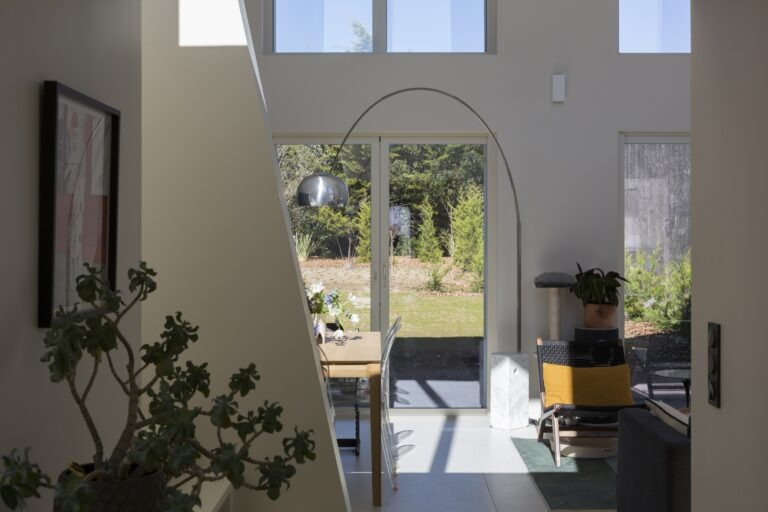
Les patios et la façade sur jardin prolongent le quotidien vers l’extérieur au gré des ambiances, des instants et des saisons.
Peu perceptible depuis la rue, l’extension se tient derrière l’échoppe dans une continuité visuelle, par rebond de toitures en tuiles canal.
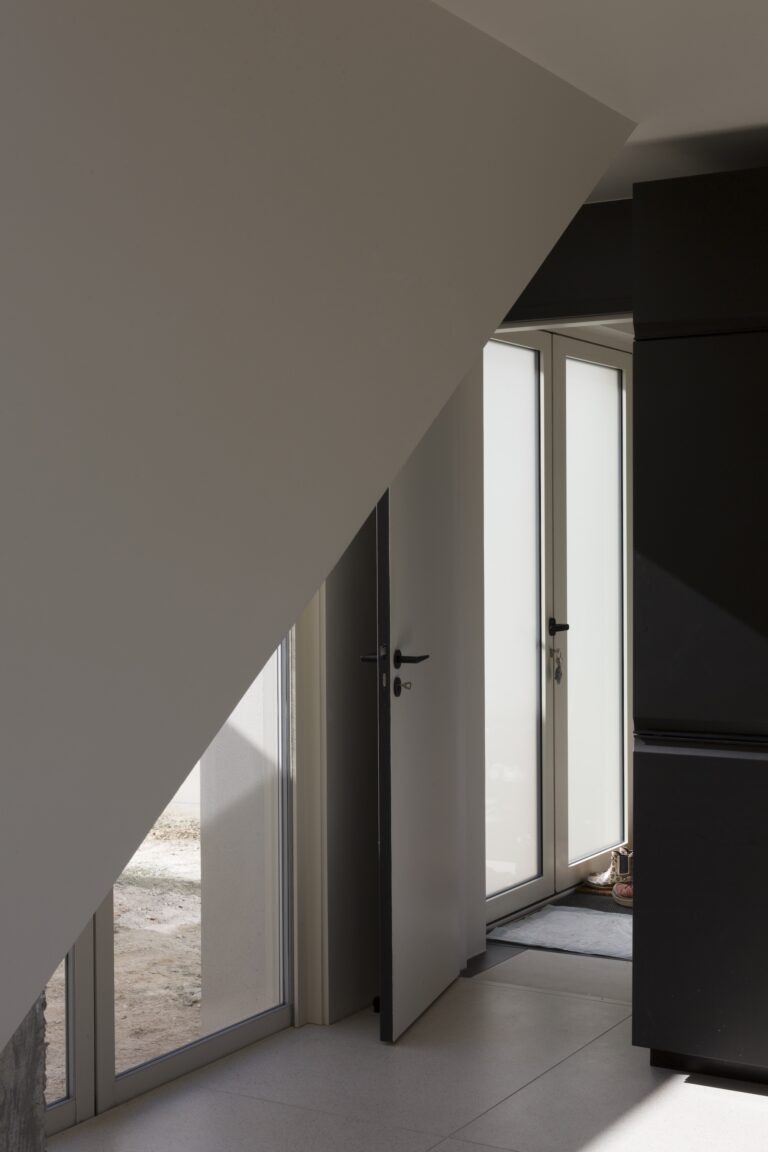
Les huit baies de dimensions rationalisées, cachent une variété de mécanismes d’ouvertures. Du coulissant à galandage, de l’ouvrant à l’anglaise, des châssis fixes ou ouvrants à soufflet, chaque baie à deux vantaux correspond à un usage, dans une unité d’aspect extérieur, cherchant à troubler la compréhension hiérarchique de l’espace.
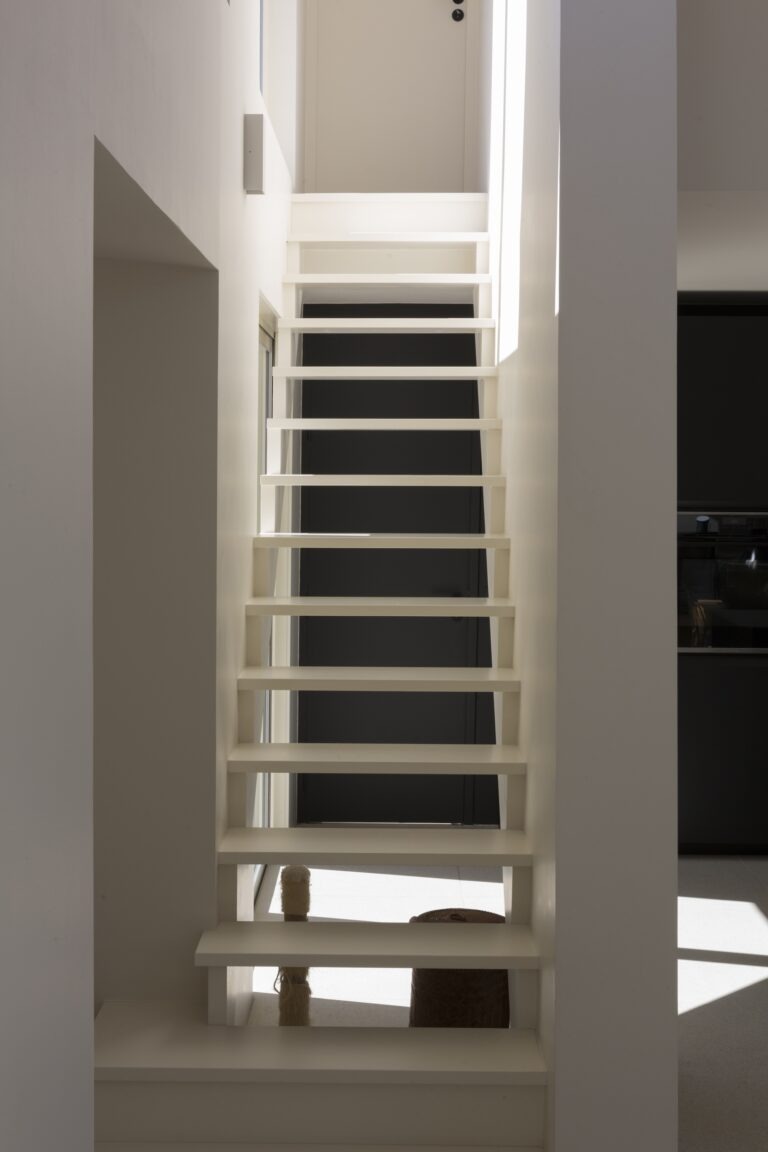
Le retournement des fonctions de l’habitat, avec les chambres sur la rue et le séjour sur le jardin, perturbe la lecture du projet, depuis la rue, mais aussi depuis le jardin. Dans le jeu subtil des évidences, derrière l’apparence d’une échoppe aimable se cache un chamboule-tout assumé, où le séjour communique directement avec la salle de bains par le patio, où l’accès peut se faire par la cuisine, le cellier ou, bien sûr, l’entrée et son long corridor reliant d’une traite la rue au jardin. Et où le ciel domine partout, donnant l’impression depuis les abords d’une addition vide.
- Programme Renovation and extension of a single-family home
- Location La Rochelle 17000, France
- Client private
- Team FMAU
- Size 148 m²
- Cost 374 785 € excl. Taxes
- Mission Complete
- Credits Antoine Espinasseau
- Project manager Frédéric Martinet
- Project team Geoffrey L'Heudé
From 1792 to 1926, a tax levied on the number of openings (doors and windows) in all French residential buildings. This duty produced, as a response, the slow and progressive bricking-up of windows and a reduction in facade widths, rendering many dwellings uninhabitable due to a lack of openings. It would take until 1926, and the modern hygienist movement, to bring this tax to an end. What might seem anecdotal reveals the intimate relationship a city maintains with its fiscal policy, as well as with the various construction and safety standards that govern it.
Since 1967, the local development tax — rebranded as the taxe d’aménagement in 2012 — has been attached to planning permits. Its calculation is based on a simple formula: Taxable area created × Flat-rate value × Rate. The flat-rate value is reassessed annually, and the rate is an average drawn from rates set by local, departmental, and regional authorities. The amount of this tax has risen steadily since its creation — by 40% between 2012 and 2025 — indirectly encouraging the transformation of existing buildings at the expense of new construction.
Maison Ciel is an extension project for a small échoppe — a single-storey terraced house — located in the suburbs of La Rochelle. The original dwelling, built at the end of the 19th century and whose signs of age had remained discreet from the street behind an overgrown front garden, features the distinctive detail of granite quoins and window surrounds, lending weight to the decision to preserve it within the new home. The additional cost of a non-radical deconstruction — retaining the rubble-stone walls and their distinctive granite blocks — is made partly viable by the economic trade-off offered by the taxe d’aménagement. Indeed, by preserving the échoppe, the tax is calculated only on the newly created floor area.
Its retention also serves as a diplomatic gesture toward the planning authorities, reconciling a familiar silhouette with a new density within this suburban fabric.
To provide the 70 m² the occupants needed, an extension was built behind the échoppe, twice its height. Held at a distance by a gallery linking it to the old walls, two patios are interposed, multiplying connections between spaces. The new structure — a 12 × 6 metre rectangle — is pierced by eight evenly distributed bays, organising a volume traversed by sky and a further interlocking level.
The plan has been inverted: the private spaces occupy the échoppe to the south, three metres from the street, while the living room and kitchen are relocated to the rear, opening onto the large garden and flooded with light. The upper floor offers an additional bedroom with its own bathroom, accommodating the family’s growth.
The patios and the garden facade extend everyday life outward, shifting with the moods, moments, and seasons.
Barely perceptible from the street, the extension sits behind the échoppe in visual continuity, echoed by the pitched canal-tile rooflines.
The eight rationalised bays conceal a variety of opening mechanisms. From sliding pocket doors to French casements, fixed glazing to top-hung vents, each double-leaf bay corresponds to a specific use — all unified in external appearance, seeking to confuse any hierarchical reading of the interior space.
The reversal of the home’s functions — bedrooms facing the street, living spaces facing the garden — disrupts the reading of the project both from the street and from the garden. In the subtle play of apparent certainties, behind the likeable face of a modest échoppe lies an unabashed upending of convention: the living room communicates directly with the bathroom via the patio; entry can be made through the kitchen, the storeroom, or — naturally — the front door and its long corridor linking street to garden in a single unbroken run. And everywhere, the sky prevails, giving passers-by the impression of an empty addition.